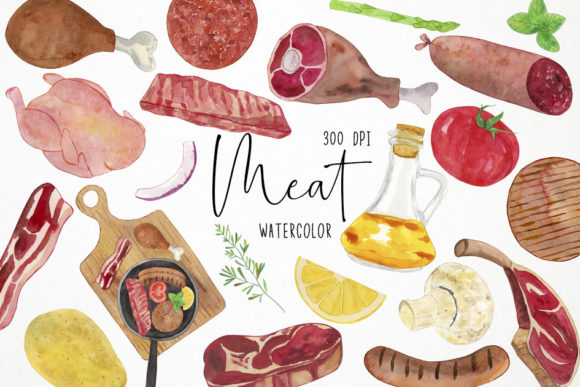
Watercolor Meat Clipart, Illustrations
As a designer who regularly works on branding, packaging, and marketing visuals for small businesses and handmade brands, I often look for unique design assets that can elevate a project without overwhelming it. Watercolor Meat Clipart, Butcher Clipart offers a distinct visual style that can bring warmth and character to a variety of creative projects. This review explores how this illustration set performs in real-world design scenarios and whether it’s a valuable addition to a designer’s toolkit.
First Impressions: A Warm, Handcrafted Vibe
The first thing that stands out about Watercolor Meat Clipart, Butcher Clipart is its soft, hand-painted aesthetic. The illustrations feel like they were drawn with care, using gentle brushstrokes and subtle color gradients. This gives the design asset a friendly, approachable mood—perfect for brands that want to convey a sense of authenticity, craftsmanship, or nostalgia.
The style leans into a rustic, artisanal feel, making it ideal for small business branding, Etsy products, or seasonal campaigns. It doesn’t scream modern minimalism, but instead offers a more organic, tactile quality that can resonate with audiences looking for something unique.
Real-World Design Applications
Watercolor Meat Clipart, Butcher Clipart shines in projects where a warm, handcrafted touch is desired. For instance, in logo design, these illustrations could serve as a complementary element, adding visual interest without overpowering the typography. In brand identity work, they might be used as decorative accents in stationery, packaging, or social media graphics.
When it comes to product labels, packaging design, or t-shirt design, the watercolor style can add a personal, bespoke feel. It also works well in sticker design, Canva templates, or Cricut projects, where the soft lines and muted tones can blend seamlessly with other design elements.
For digital sellers and print-on-demand creators, this clipart could be a great addition to a design bundle, especially if targeting markets that value handmade or vintage aesthetics. It’s also suitable for sublimation design, where the artwork can be printed on mugs, tote bags, or other merchandise with a natural, artistic finish.
Where It Excels: Large Layouts and Themed Projects
This design asset works best in larger layout areas, such as hero graphics, product mockups, or themed collections. Its detailed yet soft style makes it ideal for campaign visuals, packaging details, or printable designs that require a cohesive, visual narrative.
In editorial design or blog visuals, Watercolor Meat Clipart, Butcher Clipart can add a storytelling element, especially when paired with handwritten fonts or script styles. It also enhances the visual mood of social media posts, Pinterest pins, or Instagram content that aims to feel authentic and inviting.
Where to Use With Caution: Minimalist and Corporate Projects
While the watercolor style is charming, it may not fit well in minimalist branding or professional corporate materials. In low-contrast designs or crowded layouts, the soft edges and subtle details can get lost or appear unpolished. Similarly, in projects that require a clean visual hierarchy, the intricate textures might distract from the main message.
For commercial design or branding that demands a strong, recognizable identity, this clipart should be used sparingly. It’s better suited for supporting brand elements rather than the primary visual focus.
Design Considerations: Readability and Brand Consistency
When incorporating Watercolor Meat Clipart, Butcher Clipart into a project, it’s important to consider how it affects readability and brand consistency. The soft lines and muted colors can sometimes make text harder to read if placed too close or on complex backgrounds. Testing the asset on different color schemes and layouts is essential.
From a branding perspective, this clipart can enhance emotional appeal and audience engagement by adding a human, artisanal touch. However, it should align with the overall brand tone. If the brand is modern and sleek, this asset may not be the best fit. But for a handmade business or boutique product line, it can help create a more relatable and trustworthy image.
Practical Designer Notes: What to Check Before Using
Before using Watercolor Meat Clipart, Butcher Clipart for a client project, there are several practical considerations to keep in mind:
- Test in black and white: See how the illustration holds up without color, especially for print-on-demand or monochrome applications.
- Check contrast: Ensure it works on both light and dark backgrounds, particularly for web design or social media graphics.
- Preview at different sizes: Confirm that the details remain visible and legible at small scales, such as for stickers or product labels.
- Place on real mockups: See how it looks on actual product mockups or printed materials before finalizing a design.
- Review file formats: Make sure the asset includes PNG design files with transparent backgrounds or SVG design files for scalability and editability.
- Confirm commercial license: Verify that the asset allows for commercial use, especially if it’s being used for a client or business project.
Final Thoughts: A Unique Asset for the Right Project
Watercolor Meat Clipart, Butcher Clipart is a versatile design asset that can add warmth and personality to a wide range of creative projects. It excels in handmade businesses, small business branding, and themed campaigns where a soft, artisanal look is desired. However, it requires thoughtful placement and consideration of the overall design direction.
For designers working on printable design, digital product, or commercial design projects, this clipart can be a valuable addition to their library—especially when paired with the right fonts, colors, and layout strategies. Just remember to test it thoroughly and ensure it aligns with the brand’s visual identity and goals.